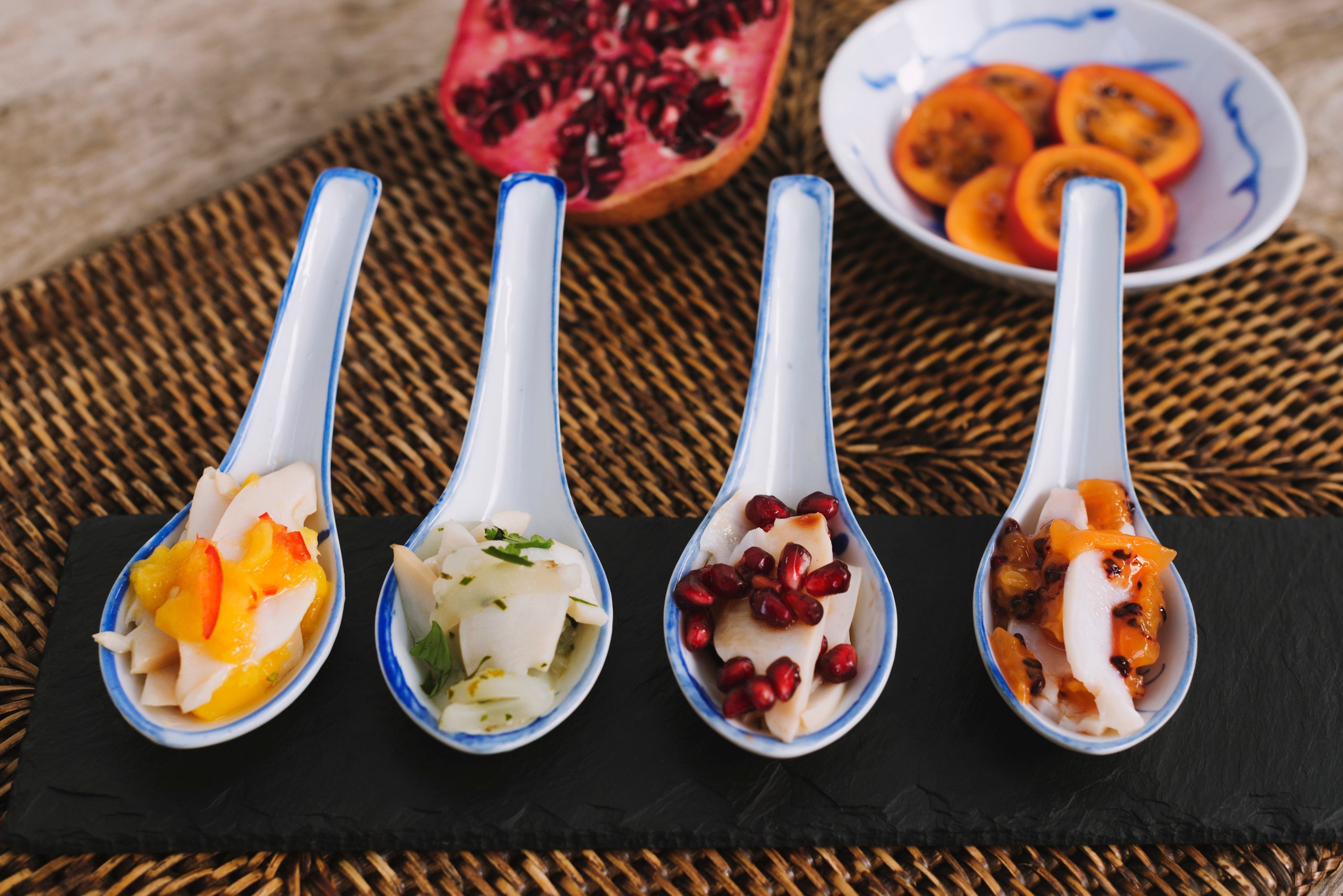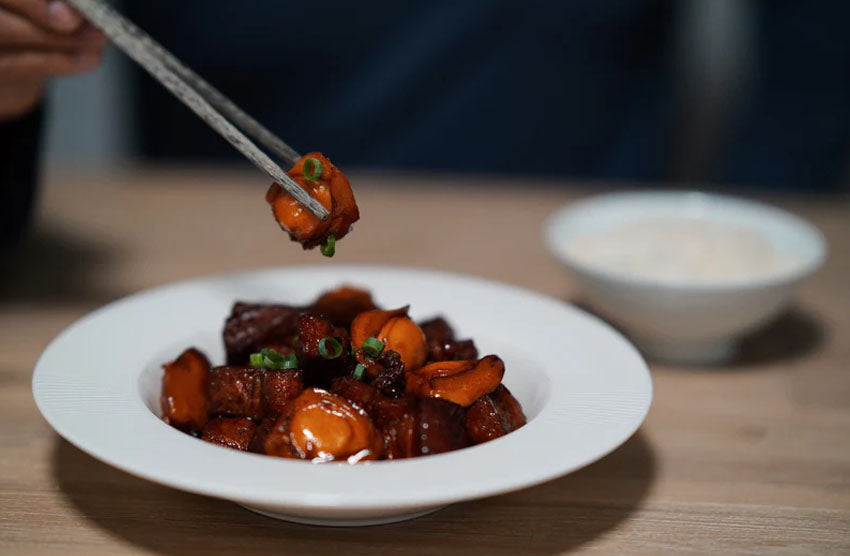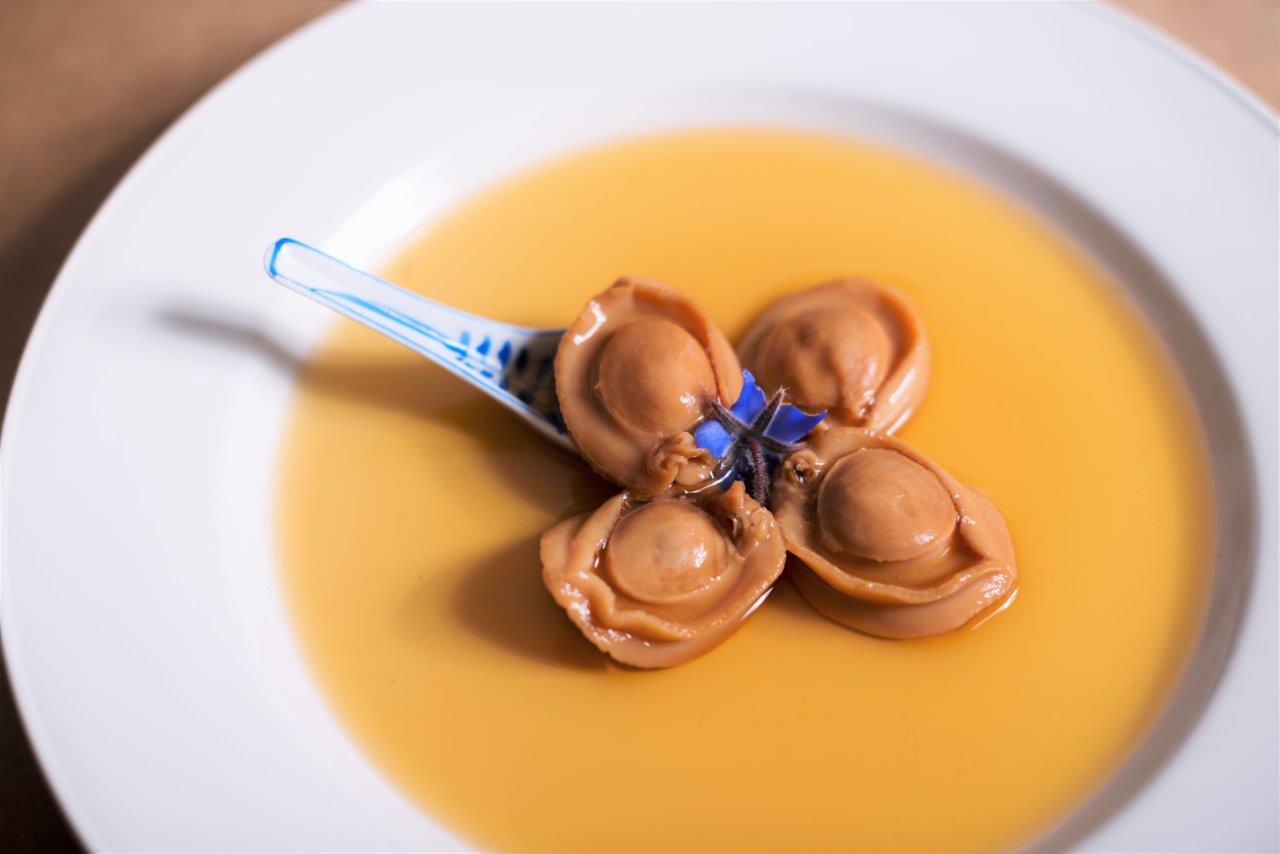
Abalone has a delicate, slightly sweet flavour with a gentle taste of the ocean and a buttery, savoury richness. If you’ve never tried it, think of the sweetness of a scallop with a firmer, meatier bite, a little like tender calamari.
That only tells part of the story, though. The species, size, diet and way it is prepared all influence the experience. A thin slice of freshly cooked abalone can feel quite different from a whole piece served from a can or pouch.
At Ocean Road Abalone, we grow Tiger Abalone near Port Fairy on Victoria’s southwest coast. Here’s how we describe it, and what you might notice when you try it yourself.
Quick links
- Flavour and texture
- What influences the taste?
- Fresh, canned, retort and dried abalone
- Why is abalone sometimes chewy?
- Trying abalone for the first time
Flavour and texture
The first thing you might notice is the balance of sweetness and savouriness. Abalone has a mild seafood flavour, with a gentle briny character and a lingering savoury quality often described as umami.
There is a natural butteriness too. It is subtle, rather than the richness of a butter sauce, and comes through most clearly when the abalone is served simply.
The texture is just as much a part of its appeal. Abalone has more bite than a scallop, with a firm, meaty feel and a little springiness. When prepared well, it is tender without losing that character.
Scallops and calamari are useful comparisons, but neither is quite the same. Abalone has a flavour and texture of its own.
What influences the taste?
The species
Different species have slightly different eating qualities. Greenlip abalone generally has a more tender texture than Blacklip, while Tiger Abalone, a cross between the two, sits somewhere between them.
We grow Tiger Abalone for its combination of delicate flavour and satisfying texture. If you’re curious about the different types, our guide to Australian abalone species explains more.
The size
Larger abalone generally have firmer flesh than smaller ones, although size alone does not determine tenderness. How you slice and cook the meat makes a considerable difference.
A whole abalone gives you a substantial bite. Cut into thin slices, the same piece feels more delicate and sits easily through a salad, pasta or rice dish.
What it eats
Diet also plays a part. Wild abalone feed on the algae available in their surroundings, which can contribute a stronger sea or seaweed character. Some people particularly enjoy that flavour.
Farmed abalone can have a milder, more delicate flavour, although there is variation between species, farms and growing conditions.
Our Tiger Abalone are bred and grown at our farm near Port Fairy, using seawater drawn from the Southern Ocean. You can read more about our abalone and how we grow them.
How it is prepared
Cooking changes both the flavour and texture. A quick sear, a slow braise and a ready-to-eat pouch each offer a different experience.
Seasoning matters as well. Butter, garlic, soy and rich stocks can all work beautifully with abalone, but they bring their own flavours. Tasting a small piece before adding a sauce is a good way to get to know the abalone itself.
Fresh, canned, retort and dried abalone
Fresh and frozen abalone
Fresh abalone gives you control over how it is prepared, sliced and cooked. Frozen abalone can be used in many of the same ways once properly thawed.
When served raw in sashimi preparations, abalone has a crisp, firm bite. Cooking changes that texture, with thin, quickly cooked slices offering a different result from pieces that have been slowly braised.
For home cooking, the important thing is to follow a method suited to the abalone you have. Our abalone cooking guide explains the different approaches.
Canned abalone
Canned abalone is cooked in the can and ready to eat when opened. It has a firm yet tender texture, and the packing liquid contributes to its flavour.
Our canned abalone is packed in brine, which adds a savoury, gently salty character alongside the abalone’s natural sweetness. You can slice and serve it straight from the can or use it in a warm dish.
The brine can also add depth to a soup or sauce. Taste it before adding extra salt, soy or other salty ingredients.
Canned abalone in a rich braising sauce will taste different again, as the sauce becomes a much bigger part of the experience.
Retort abalone
Retort abalone is cooked and preserved in a sealed pouch. Our plain retort abalone contains only Australian Tiger Abalone, cooked in its own natural juices with no added brine, preservatives or additives.
It is an easy way to experience the abalone’s own flavour: delicate sweetness, gentle ocean notes and a rounded savouriness, with a tender, slightly springy bite.
Like canned abalone, it is already cooked. You can slice it cold, gently warm it or add it near the end of cooking. The natural juices in the pouch can become part of the dish too.
The sealed pouch is shelf-stable before opening, making it convenient to keep on hand or give to someone who enjoys discovering new food. Follow the storage instructions on the pack once opened.
Dried abalone
Dried abalone offers another experience altogether. It requires soaking and lengthy preparation, and is particularly associated with traditional braised dishes.
One prized quality is sometimes called a “sugar heart”: a soft, sticky centre developed through drying and careful cooking. The name describes that distinctive centre, rather than a sugary filling.
It takes more time and experience to prepare, which makes it quite different from opening a can or a ready-to-eat pouch.
Why is abalone sometimes chewy?
Abalone naturally has a firm bite. That is part of what makes it enjoyable, but there is a difference between a pleasant chew and a rubbery piece that is difficult to eat.
The result depends on the product, thickness and cooking method. Larger or thicker pieces can feel firmer, while thin slices are generally easier to eat. Cooking fresh abalone for too long using a quick-cooking method can also make it tough.
Slow braising is a different approach, using time and moisture to soften the meat. That is why advice about cooking abalone needs to match the recipe and product, rather than rely on one rule for every dish.
Our canned and retort abalone are already cooked, so you do not need to cook them again to make them ready to eat. For a warm dish, gentle heating or adding them towards the end is often all that is needed.
Trying abalone for the first time
If you’re curious, start simply. Open a pouch of our plain retort abalone, cut a thin slice and taste it before adding anything else. Notice the sweetness first, then the savoury flavour and gentle springiness as you chew.
From there, try it in a dish you already enjoy. You do not need an elaborate recipe to make it feel special.
Our Abalone Thai Summer Salad is an approachable place to start. It combines ready-to-eat retort abalone with noodles, crisp vegetables, herbs and a chilli-lime dressing.
If you enjoy preparing fresh seafood and want a more involved meal, our Grilled Abalone with Lemon Herb Butter & Truffle uses live Tiger Abalone.
You’ll find more ideas in our recipe collection, with dishes organised by the type of abalone you’re using.
Whether you prefer it simply sliced or as part of a shared meal, tasting it for yourself is the best way to discover what makes abalone special.